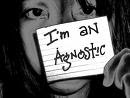
I continue to struggle with 1) the whole idea that humans could possibly know the “mind”, “heart” or “will” of “God” and 2) that this supernatural “God” would intervene and reveal special messages to human beings (especially through one particular culture’s set of scriptures). As I understand it, most- if not all- forms of theology seem to be rooted in these two assumptions.
While I like the idea of using term “God” as being synonymous with “our ultimate concern” or symbolic of “that force within us that seeks truth or liberation,” my “red flags go up” when we start to personalize and give a human face to “God.”
As it relates to Liberation Theology, I’ve been wondering: Do we need a “God” to command us to treat others rightly? Has “God’s” name been utilized to invoke a compassion and justice based out of a fear of wrath or can we invoke compassion and justice through a reverence for our neighbor (which is enlightened by the scientific insight that we are all related in our biology and interconnected in this ecosystem called Earth)? Do we really need “God” to initiate responsive action toward the liberation of captives? Do we really need to be threatened by either earthly or eternal punishment or enticed with material or heavenly rewards in order to for us to be respectful, hospitable and humane towards others? I find it interesting that several other religious traditions manage to invoke compassion and make appeals for liberation without attributing it as being the willed command of a deity.
Instead of being “the revealed word of God,” could the Bible’s commands merely be those human ideas, tribal instincts and behavioral recommendations that gave Jewish and Christian cultures a sense of identity and stability in the midst of those surrounding cultures they considered “ungodly”? Here, I think of the Book of Leviticus and its repetitive commands to, “Be ye not like those people…be like this.” I also recall The Code of Hammurabi, how it was written centuries before the Hebrew Bible, how the Bible shares many of its laws, and how Hammurabi attributed the composition of his code to Marduk, the patron deity of Babylon. It’s enough to make me wonder: Is the Bible a collection of man-made commands that have been imposed by well-meaning people as being “God’s” will?
Maybe my “hermeneutics of suspicion” has been over-developed, but it seems presumptuous to suppose that the alleged creator of our expansive universe would be so wrapped up in earthly affairs that they would communicate their important and timeless message to all of humanity primarily and exclusively through the writings of a special group of Hebrew prophets and scribes who lived thousands of years ago. It’s hard for me to continue to believe that these special individuals were assigned to set forth “God’s” will in their time- for ALL time. As I’ve said before, I think the Bible is a collection of documents written for a variety of reasons by insightful, culture-bound Middle Eastern authors and that its interpretation is based on what some insightful humans throughout history have found in its pages to be meaningful, important and relevant for their own lives.
I’m willing to grant that there may be some transcendent, mystical dimension to life, but my doubts lead me to suspect that most- if not all- alleged mystical experiences could be accounted for with a naturalistic explanation of the brain’s neurobiological activities. While there “may” be some transcendent dimension, I doubt we human beings can be so secure in our certainty that such a dimension exists and that any of us can understand it.
It seems to me that “God” is a symbolic term that we humans often use to describe those aspects of reality which lay beyond our current understanding. If we don’t understand something, we often attribute it to “God.” How and why did I wake up this morning? I don’t know. It must be God. How was my daughter formed in the womb? I don’t know. It must be God. Why was I born into relative ease and privilege? I don’t know. Must be God. Why didn’t that tornado tear through my household as it did so many others? I don’t know. Again, it must be God.
For centuries, the natural sciences have been progressively chipping away at those things we formerly attributed to “God.” Astronomy, biology, physics, neurobiology and meteorology are just a few examples of fields that have made tremendous progress in explaining those things formerly beyond our capacity to comprehend. For thousands of years, cultures believed that “God” controlled the weather and that the weather was a reflection of either “God’s” favor or outrage. Now, I’d dare say, we know better.
At bottom- and at this point in my life- I think we attribute far too much of our perceived reality to the notion of “God.” I get suspicious of any and all who claim to know what this “God” wants- especially if it seems to mirror their own hopes, fears, desires and concerns.
Showing posts with label Truth. Show all posts
Showing posts with label Truth. Show all posts
Thursday, May 8, 2008

Monday, March 17, 2008
Reflections on Rev. Dr. Jeremiah Wright's controversial remarks
 The Rev. Dr. Jeremiah Wright is an interesting character. I actually saw him speak earlier this year at a memorial service in honor of Dr. Martin Luther King Jr. where he brought attention to the fact that- out of all the King memorial services he had ever been invited to- he had never heard anyone bring attention to King's April 4, 1967 speech criticizing the United States' involvement in the Vietnam War. I spoke to him after his presentation and he gave me his business card (which I still have in my wallet).
Known for his stance of being “unashamedly Black and unapologetically Christian,” Pastor Wright has grown in popularity recently due to his reputation for outspokenness against the U.S. government and his relationship with his most popular church member, presidential hopeful Senator Barack Obama (D-Ill.). Dr. Wright has recently been in the news regarding some quotes taken from a sermon he gave over 5 years ago from his pulpit at Trinity United Church of Christ located on the southside of Chicago, Illinois. When I first heard excerpts of Dr. Wright's sermon, I thought he had gone off of the deep end. I wasn't surprised to also hear that Senator Obama had publicly distanced himself from Wright and denounced his remarks as "divisive."
But after some reflection and investigation, I’ve come to believe that despite some abrasive phrasing, Dr. Wright was accurate in his sharp criticism of America’s oppressive policies and actions on both domestic and foreign soil. My only issue with Dr. Wright’s sermon has to do with his occasionally coarse and offensive phrasing of ideas (unlike Dr. Martin Luther King’s more diplomatic yet equally sharp critique of the U.S. in his anti-war sermon from April 4, 1967). But I don't think we should stop at the point of offense. We need to listen closely to hear the concern behind the commentary. In the sermon excerpts that the media has been quoting lately, Dr. Wright is “spot on” when he refers to the U.S. government’s treatment of young black males:
“The government gives them the drugs, builds bigger prisons, passes a three-strike law and then wants us to sing ‘God Bless America.’ No, no, no, God damn America, that’s in the Bible for killing innocent people. God damn America for treating our citizens as less than human. God damn America for as long as she acts like she is God and she is supreme…We bombed Hiroshima, we bombed Nagasaki, and we nuked far more than the thousands in New York and the Pentagon, and we never batted an eye. We have supported state terrorism against the Palestinians and black South Africans, and now we are indignant because the stuff we have done overseas is now brought right back to our own front yards. America’s chickens are coming home to roost.”
In all fairness, behind what many have deemed as unpatriotic, divisive, inflammatory and insensitive rhetoric, Dr. Wright is telling the truth about America's history. Yes, the idea that we sing “God Bless America” as if God would bless America above all others is arrogant and narcissistic. Yes, the Bible mentions plenty of instances where The God of Israel orders the slaughter of innocent people and our government has also commissioned the killing of innocent people. Yes, throughout history the U.S. government acts as if it has been divinely ordained to conquer and control other cultures, peoples and the resources of the earth. Yes, it is highly likely that recent attacks on the U.S. are merely responses to our often violent and suppressive foreign policies and actions. I think Dr. Wright is right to critique those things and I wholeheartedly agree with him on these matters.
Now, I definitely think Dr. Wright could have presented his ideas in a less abrasive way- without all the “God damns” and “God damn Americas” when he might have been more accurate to specify what he meant by "America"and whether or not he was referring to our country's ideals, the people, or the American government and the decisions of its legislative and executive branches. I also don’t think it helped matters much for him to allude to Malcolm X’s infamous “chickens coming home to roost” quote- which was originally given in response to the news of John F. Kennedy’s assassination- itself a phrase that carries within it the heavy baggage of racial tension, a negative view of Islam, and smacks of unpatriotism during a time of intense anxiety and hostility in regards to race relations. But. in reality- and as Wright alludes to in his sermon- he was quoting Edward L. Peck, who had allegedly spoken out about America's foreign policies in an interview the night before Wright's sermon.
While I think Dr. Wright could have maintained effectiveness by rephrasing his ideas, and went too far with his "God damn America" line, I sometimes think we miss the point and get offended by the way someone presents their words and ideas without really hearing the hurt, rage or concern behind them. I think it would be an injustice to ignore the validity of Dr. Wright’s words due to our being offended by his presentation because I believe he has brought to light some serious truths that our country needs to confront. In a way, I am glad the media keeps replaying the quotes from his sermon because I hope that more people can hear the hurt and concern behind what many have deemed as being unpatriotic, divisive and inflammatory rhetoric and investigate the matter for themselves. Since Wright's remarks became public, many skeptical of media slants have scoured YouTube and internet search engines searching for audio clips and transcripts of Wright's sermon so that they can hear it in context for themselves.
Dr. Wright is retiring soon, but in the future, we may find ourselves remembering him as one of those prophets who never fully understood or appreciated during their lifetime. We'll see.
Now, I definitely think Dr. Wright could have presented his ideas in a less abrasive way- without all the “God damns” and “God damn Americas” when he might have been more accurate to specify what he meant by "America"and whether or not he was referring to our country's ideals, the people, or the American government and the decisions of its legislative and executive branches. I also don’t think it helped matters much for him to allude to Malcolm X’s infamous “chickens coming home to roost” quote- which was originally given in response to the news of John F. Kennedy’s assassination- itself a phrase that carries within it the heavy baggage of racial tension, a negative view of Islam, and smacks of unpatriotism during a time of intense anxiety and hostility in regards to race relations. But. in reality- and as Wright alludes to in his sermon- he was quoting Edward L. Peck, who had allegedly spoken out about America's foreign policies in an interview the night before Wright's sermon.
While I think Dr. Wright could have maintained effectiveness by rephrasing his ideas, and went too far with his "God damn America" line, I sometimes think we miss the point and get offended by the way someone presents their words and ideas without really hearing the hurt, rage or concern behind them. I think it would be an injustice to ignore the validity of Dr. Wright’s words due to our being offended by his presentation because I believe he has brought to light some serious truths that our country needs to confront. In a way, I am glad the media keeps replaying the quotes from his sermon because I hope that more people can hear the hurt and concern behind what many have deemed as being unpatriotic, divisive and inflammatory rhetoric and investigate the matter for themselves. Since Wright's remarks became public, many skeptical of media slants have scoured YouTube and internet search engines searching for audio clips and transcripts of Wright's sermon so that they can hear it in context for themselves.
Dr. Wright is retiring soon, but in the future, we may find ourselves remembering him as one of those prophets who never fully understood or appreciated during their lifetime. We'll see.
Wednesday, February 20, 2008
Am I Seeking Truth or Justification?
In my quest for knowledge I sometimes I have to stop and ask myself, “Am I seeking the truth or am I seeking justification for my opinions?” This question plagues me regularly and the doubt it invokes in my mind haunts me to humility. It seems that one can go so deep into one’s research that one loses the ability to distinguish between the hunger for truth and the desire for justification. But interestingly, there have been plenty of times in my life when my desire for justification has led me to “the truth” about something.
Sometimes I will have a hunch or a growing conviction that has yet to be supported by adequate evidence and, despite my lack of information, I hold on to such convictions because I think I might be on to something (a kind of “faith”- I suppose). In other words, I have a sneaking suspicion that- given adequate time and investigation- I could discover a new truth or way of understanding something.
A majority of my suspicions are driven by hints of an anomaly that is being ignored, suppressed or overlooked by popular opinion. Other times, my hunches and suspicions are aroused in response to condemnatory acts committed towards other people in the name of a political or religious ideology. Many times I have followed such hunches to some rather credible sources which have given adequate support for my unconventional views.
But I also realize how dangerous it is to seek justification for one’s opinions with no regard for the truth. Those individuals who follow that path are highly resistant to reasonable alternatives and will not allow themselves to entertain the validity of a different perspective. Instead, they operate with a narrow "tunnel-vision", focused only on their personal agendas. This is an easy trap to fall in and I pray that I can avoid succumbing to this temptation. Such an extreme desire for justification destroys the possibility for both honest investigation and authentic dialogue between concerned individuals. Convinced of the certainty of their claims, such dogmatic individuals evoke in my mind the image of a deaf megaphone shouting its proclamations at a high decibel level with no regard for the whispering voices of reason, doubt and humility- those age-old enemies of individuals who seek to justify themselves.
While some fundamentalists might view them as the qualities of inferior beings, I value reason, doubt and humility as I believe they are trustworthy guides in the sincere search for truth and discovery. I personally find no value in being irrational, certain and confident when one’s views are proven to be wrong.
But I don't mistake humility for silence. I truly believe there are those times in which we must fearlessly express both our concerns and the truth as we understand it. Here, I am reminded of Dr. Martin Luther King Jr.’s prophetic address at New York’s Riverside Church on April 4, 1967 (exactly one year before his assassination) where he reinforced his much-criticized opposition to the United States’ involvement in the Vietnam War. King opened his speech with a stirring discussion about the difficulty of being a non-conformist driven by “the demands of inner truth” during a time of great uncertainty. King says:
I find that when I am surrounded by those whose opinions and conclusions I consider faulty or misinformed, I feel compelled and responsible to seek out a more intellectually credible alternative. In those times, it seems my desire for truth and justification merge into one. But maybe that’s not a bad thing. Perhaps we would never seek truth if we didn’t desire some degree of justification for our hunches. Maybe this is one process that leads to progress.
Now I recognize that every researcher is limited by their own humanity and selective in their reference materials. I am also aware of my own tendency to persist in a desperate hunt for a loophole in what I consider to be an inconvenient truth. I admire the irony that in many cases those who aggressively seek to discredit an idea often find themselves becoming converted to the claims of that same idea. This gives me hope in the human capacity to seek the truth and shows that truth may survive despite our best efforts to resist it or suppress it.
I find it much more noble to seek the truth despite our desire for justification. Here, I am reminded of a few things a close friend of mine and fellow seminarian once said. Once, while praying before his sermon, my friend- a young, liberal-minded African-American pastor and scholar- stood before a congregation of conservative Christians and in a gentle tone said, “May we have the courage to follow the truth wherever it leads us.” With this statement, he laid out the inherent risk that exists along the path towards the truth. Following this train of thought, one can conclude that the truth is often unsettling and will probably cost us our comfort- and that is a cost very few of us are willing to pay. Several months prior to that moment, I had a conversation with this same friend who told me, “It is not heresy to question the truth; it is only heresy to deny the truth once it has been made obvious to you.”
I think those are encouraging words for any truth-seeker. May we follow the truth wherever it leads us and may we both recognize and accept it in all of its unsettling forms.
Sometimes I will have a hunch or a growing conviction that has yet to be supported by adequate evidence and, despite my lack of information, I hold on to such convictions because I think I might be on to something (a kind of “faith”- I suppose). In other words, I have a sneaking suspicion that- given adequate time and investigation- I could discover a new truth or way of understanding something.
A majority of my suspicions are driven by hints of an anomaly that is being ignored, suppressed or overlooked by popular opinion. Other times, my hunches and suspicions are aroused in response to condemnatory acts committed towards other people in the name of a political or religious ideology. Many times I have followed such hunches to some rather credible sources which have given adequate support for my unconventional views.
But I also realize how dangerous it is to seek justification for one’s opinions with no regard for the truth. Those individuals who follow that path are highly resistant to reasonable alternatives and will not allow themselves to entertain the validity of a different perspective. Instead, they operate with a narrow "tunnel-vision", focused only on their personal agendas. This is an easy trap to fall in and I pray that I can avoid succumbing to this temptation. Such an extreme desire for justification destroys the possibility for both honest investigation and authentic dialogue between concerned individuals. Convinced of the certainty of their claims, such dogmatic individuals evoke in my mind the image of a deaf megaphone shouting its proclamations at a high decibel level with no regard for the whispering voices of reason, doubt and humility- those age-old enemies of individuals who seek to justify themselves.
While some fundamentalists might view them as the qualities of inferior beings, I value reason, doubt and humility as I believe they are trustworthy guides in the sincere search for truth and discovery. I personally find no value in being irrational, certain and confident when one’s views are proven to be wrong.
But I don't mistake humility for silence. I truly believe there are those times in which we must fearlessly express both our concerns and the truth as we understand it. Here, I am reminded of Dr. Martin Luther King Jr.’s prophetic address at New York’s Riverside Church on April 4, 1967 (exactly one year before his assassination) where he reinforced his much-criticized opposition to the United States’ involvement in the Vietnam War. King opened his speech with a stirring discussion about the difficulty of being a non-conformist driven by “the demands of inner truth” during a time of great uncertainty. King says:
Even when pressed by the demands of inner truth, men do not easily assume the task of opposing their government's policy, especially in time of war. Nor does the human spirit move without great difficulty against all the apathy of conformist thought within one's own bosom and in the surrounding world. Moreover, when the issues at hand seem as perplexed as they often do in the case of this dreadful conflict, we are always on the verge of being mesmerized by uncertainty; but we must move on. And some of us who have already begun to break the silence of the night have found that the calling to speak is often a vocation of agony, but we must speak. We must speak with all the humility that is appropriate to our limited vision, but we must speak.King speaks of a desperate need to speak out against injustice with “the humility that is appropriate to our limited vision.” But he is not calling for a humility that is silenced or "mesmerized by uncertainty," but one that functions despite it.
I find that when I am surrounded by those whose opinions and conclusions I consider faulty or misinformed, I feel compelled and responsible to seek out a more intellectually credible alternative. In those times, it seems my desire for truth and justification merge into one. But maybe that’s not a bad thing. Perhaps we would never seek truth if we didn’t desire some degree of justification for our hunches. Maybe this is one process that leads to progress.
Now I recognize that every researcher is limited by their own humanity and selective in their reference materials. I am also aware of my own tendency to persist in a desperate hunt for a loophole in what I consider to be an inconvenient truth. I admire the irony that in many cases those who aggressively seek to discredit an idea often find themselves becoming converted to the claims of that same idea. This gives me hope in the human capacity to seek the truth and shows that truth may survive despite our best efforts to resist it or suppress it.
I find it much more noble to seek the truth despite our desire for justification. Here, I am reminded of a few things a close friend of mine and fellow seminarian once said. Once, while praying before his sermon, my friend- a young, liberal-minded African-American pastor and scholar- stood before a congregation of conservative Christians and in a gentle tone said, “May we have the courage to follow the truth wherever it leads us.” With this statement, he laid out the inherent risk that exists along the path towards the truth. Following this train of thought, one can conclude that the truth is often unsettling and will probably cost us our comfort- and that is a cost very few of us are willing to pay. Several months prior to that moment, I had a conversation with this same friend who told me, “It is not heresy to question the truth; it is only heresy to deny the truth once it has been made obvious to you.”
I think those are encouraging words for any truth-seeker. May we follow the truth wherever it leads us and may we both recognize and accept it in all of its unsettling forms.
Tuesday, January 29, 2008
My Issues with Interpretation (Parts I, II & III)
“You will find that many of the truths we cling to depend greatly on our own point of view.”Part I: Thus Saith the Lord or Thus Saith the Preacher?
- Obi-Wan Kenobi, Star Wars: Return of the Jedi (1983).
Last Sunday morning, I observed yet another pastor claim that they were speaking and preaching “What Thus Saith the Lord.” The expectation is that preachers are to present to the people “The Word of God” (understood as the Bible itself) and not their own personal opinion. In the process of preaching, this particular pastor offered a bold critique of scholars, theologians and philosophers who he considers as being too critical and analytical in discussing issues that seem “above and beyond” what he considers the Bible’s “simple” message. He accused these individuals of promoting their own personalities and philosophies of who Jesus was instead of preaching who the Bible says Jesus was. His concerns were apparently shared by many in the congregation who nodded, clapped and shouted to communicate their agreement.
I sat silently as such statements sparked a multitude of thoughts in my mind. For one thing, I think the act of interpretation is far more complicated than he claims. From my own research and experience in seminary, I have grown to be convinced that “nobody is neutral” and that we humans can’t help but form our own philosophical approaches to help us make sense of reality. I am persuaded that every human’s perspective is constantly responding to and being informed by their particular background, social standing, experience, culture, biases, prejudices and concerns. If every human authority is steeped in a particular perspective and bias, then I would deduce that the human authors of the Bible’s contents were also affected by human limitations, tendencies and cultural conditions. Add to that the fact that, a few millennia later, we are trying to interpret those ancient documents and one can see how the limits of humanity only serve to compound the complexities of the interpretive process.
Perhaps it is this difficulty that intimidates many of those who claim to accept certain ideas “by faith,” choosing not to dwell on the complex matters. But what is reality and how do we respond to this reality?
As humans, there are plenty of things that we hope to be true about ourselves and the universe. Many of us hope that there is someone listening to (and answering) our prayers, that our loved ones will be safe from harm, and that we are correct in our understanding of those things that provide our lives with a sense of meaning and purpose. Some of us even hope in a glorious afterlife and a warm reception into an otherworldly realm following the unavoidable moment when our last breath leaves our physical bodies. We humans seem to need something to hope for in order to function.
But if we are honest in facing reality we may discover that a large amount of what we had hoped to be true about ourselves and the universe may prove to be the result of flawed information, mistaken assumptions or grave misunderstandings. What do we do then?
In regards to perceiving reality, I think it is often the case that we humans tend to see what we want to see. We (including myself) rationalize and justify those things we hope to be true despite compelling arguments and evidence to the contrary. It seems that we devise ideas, theories, and meanings to help us understand the complexities and mysteries of reality. Considering this tendency, I deduce that it is unrealistic to expect that we humans can be anything but subjective in our understanding of reality.
By subjective, I am describing our own biased outlooks- perspectives which may not be immediately obvious or apparent to the perceptions of others. The opposite of subjectivity is objectivity. An objective observation is neutral, unbiased and impartial; it is based on facts rather than bias, prejudice, emotion or opinion. The social sciences testify that we humans can never be objective in our assessments because- no matter how hard we try to avoid it- we humans remain confined to our subjectivity.
Retired Episcopal Bishop and author John Shelby Spong offers a similar thought in an article he wrote for http://www.beliefnet.com/ almost 10 years ago.
No human being, no hierarchy, and no church can ever tell anyone who God is or what God is...All anyone can ever tell another person is how he or she or a particular institution believes it has experienced God. All God talk--including all scriptures, all creeds, all theology--is subjective, not objective.Oh, how refreshing it would be if people would admit to the limits of their own humanity! I think that such honesty and humility would greatly add to the credibility of those who claim to offer us "the truth."
Part II: Attempts to Grasp the Ungraspable
In their book, Why God Won’t Go Away: Brain Science and the Biology of Belief authors and neuroscientists, Andrew Newberg, M.D., Eugene D’Aquili, M.D., Ph.D., and Vince Rause observe that “We interpret and funnel that which our brain tells us is real through our subjective self-awareness” (p. 143).
The authors, relying heavily on the results of their own research experiments and the testimonies of mystics from the world’s major religious traditions (especially contemplative Catholics and Buddhists engaging in meditation), seem to embrace the idea of an unknowable God (or Ultimate Reality) as opposed to a personal (or personalized) God. The authors perceive that the contemplative mystics of various religious traditions typically understand God as being “beyond all comprehension and description, and that all literal interpretations of [this] unknowable nature can never be more than symbols pointing toward a deeper, more mysterious truth” (p. 158).
The authors say a lot about a mysterious neurobiological state of transcendence they call “Absolute Unitary Being” describing it as “a state of pure awareness, a clear and vivid consciousness of no-thing…a sudden, vivid consciousness of everything as an undifferentiated whole” (p. 147). They claim that “[i]n Absolute Unitary Being, nothing is experienced but the pure and complete unity of all things, or of no-things. One thing cannot stand apart from another, so individual beings and objects cannot be perceived. The egotistical self cannot exist because it has no non-self against which to define itself. In the same fashion, God cannot be set apart from this ultimate oneness as an identifiable, personalized being- to do so would be to conceive of a God who is less than absolutely real” (p. 160-161).
They continue, “The perception of an absolute reality therefore, would demand that God be more than a knowable being, and make it clear that all personifications of God are symbolic attempts to grasp the ungraspable…the state of Absolute Unitary Being impresses upon anyone who experiences it, the realization that the God we can know is only a glimmer of a higher spiritual reality, in the same way, perhaps, that a single beam of light implies the glory of the sun…” (p. 161).
They conclude one of their points by saying, “If we are right, if religions and the literal Gods they define are in fact interpretations of transcendent experience, then all interpretations of God are rooted, ultimately, in the same experience of transcendent unity. This holds true whether this ultimate reality actually exists, or is only a neurological perception generated by an unusual brain state. All religions, therefore, are kin. None of them can exclusively own the realist reality, but all of them, at their best steer the heart and mind in the right direction.” (p. 160-162)
I think these authors are really on to something here when it comes to reality and the human attempts to understand that reality.
Part III: The Implications of Interpretation
It seems to me that it is often the case that an observable event occurs and we- the observers- are left to interpret and make sense of the objective facts by creating an understanding born from our subjective viewpoints and the selective evidence available to us. In other words, objective events happen and we come up with subjective explanations to make sense of those events.
One example of this is a simple as a dream. The other day I found myself thinking about the subjective nature of dream interpretation. I have known people (including myself) who have had dreams or visions of bizarre happenings and have understood these as “messages from God.” The interesting thing I began to note in myself is that when I awake from a dream, I immediately attempt to piece together the memorable details. It becomes a strange exercise when I try to identify the fuzzy figures from my dream by linking them to familiar faces and names of those I have known or seen before.
But how trustworthy is this process of interpretation? How do we know when a dream-like vision is an important message or the result of some unsettling neurobiological activity? Living in a country where many subscribe to a biblical worldview, it becomes relevant for us to consider reconsider those Bible stories where characters in the stories receive messages and directions from a dream which serve to warn or to inform them of a future event. Based on such stories, many throughout history have been led to believe that they too are capable of receiving and understanding such messages by interpreting their own dreams and visions.
But this is where I think things can get really nebulous. While I think that one could derive meaning from one’s subjective perception of reality, I take issue when others are expected to accept another’s subjective perception of reality- lest they be condemned by rejecting it.
I have spoken with several people who claim they have had dreams and visions where religious figures such as Jesus, Mary the mother of Jesus, or the Prophet Muhammad have appeared to them. When I hear such reports, questions begin to race through my mind, such as: “Did that really happen?” and “How do they know what Jesus, Mary or Muhammad looked like in order to identify them?” I am not denying that mystical experiences happen, but I wonder how accurate we are in reporting what we experience. Do we just see what we want to see?
Another example of human subjectivity in the face of an observable event is the crucifixion of the 1st century Palestinian Jew known to history as Jesus of Nazareth. Some would claim that history bears witness to this man’s death by torture on a wooden cross. (NOTE: Others would be more skeptical when they consider the sources of most of our information about Jesus’ crucifixion come from the records of his devoted followers who were already convinced that he was the Jewish Messiah and "The Savior of the World." Regardless, these sources indicate that Jesus died within hours of his crucifixion).
The death of Jesus would seem to describe both an objective and a measurable event. But the tricky part arises when those who observe such an event begin to attach meaning, value, or significance to the “cold, hard fact” of the matter. Adherents to a classic and popular form of Christianity would later come to believe that the physical death of Jesus of Nazareth carried a meaning and significance of cosmic and metaphysical proportions in which a sinless being (a divine-human hybrid) willingly and knowingly sacrificed themselves to atone for the sins of humanity and to reconcile humans to a personal God who required such a sacrifice. Many others would deny the attaching of any such significance to the death of Jesus and count this event as they would the untimely death of any other human being who is victimized by human violence. Over the last two millennia, scores of theologians and philosophers have tried to make sense of this event- trying to interpret and understand objective reality through their subjective human explanations and understandings.
This is a prime example that adds grayscale complexity to a reality that was already complicated to begin with. One event with an endless variety of explanations and thus the root of many conflicts and controversies in our modern world.
What is at stake here? I believe that issues of interpretation lead directly into corresponding issues of authority and trust. What sources of information are worthy of our trust? What authorities are we basing our conclusions upon? What are the implications of accepting such authorities? What is our responsibility as humans with the means to think for ourselves? The way I see it, the authorities we trust will have an inevitable effect on our view of reality. In the same manner, our views of reality will have an inescapable effect on our behaviors. And because of this, issues of interpretation carry both constructive and destructive potential.
For example, if I believe that my next door neighbor is subhuman and inferior to me then it is likely that I will not value their life as much as I value my own. Therefore, my actions toward them will inevitably serve as expressions of that belief. On the other hand, if I believe that my next door neighbor is a human of equal worth and deserving of fair treatment and mutual respect, then that belief will also find expression through my actions and interactions with them. Hence, one’s behavior is a natural consequence of one’s beliefs. That’s precisely why this business of interpretation is so risky and scary.
Imagine how helpful it would be if we could bring a biblical author from 2,500 years ago onto Book TV to discuss and answer questions about what they were thinking about and experiencing when they were writing their passages, poems, and psalms. It’s fun to imagine what such a Q&A would be like. I’d like to think that such an exchange would help to resolve a lot of the speculation fueling many of our modern-day debates regarding biblical interpretation. But until such an unlikely possibility becomes possible all we have to work with are fragments of an ancient world and our own opinionated and selectively informed viewpoints about what those fragments meant to the ancients then and what they mean for us in the present day.
I realize that my perspective is limited and I am willing to consider that I may be in error, but I am interested in dealing with reality, not avoiding it. I believe that only by confronting the complexities of reality can we hope to make any progress in this thing called life.
"Welcome to the confusion."- Carmelo Alvarez
Thursday, August 2, 2007
The Risky Path of the Truth-Seeker
I am troubled by what seems to be anti-intellectualism amongst Christians. And Scriptures like Colossians 2:8 (about not being persuaded by deceptive philosophies) are troubling for me. Why? Because my studies indicate that ancient philosophers and theologians are largely responsible for much of what is now considered a mainstream understanding of the Christian faith. Ideas about God being "omnipotent, omniscient, and omnipresent” are concepts and terms rooted in ancient Greek philosophy. Doctrines like “original sin” and “atonement theory” were born from philosopher/theologians like Augustine and Anselm of Canterbury. Christianity began incorporating these and other philosophies as it spread throughout surrounding cultures.
However, I find it interesting and ironic that- in our modern age- those who claim to live by "biblical principles" also make entensive use of these "philosophical" ideas which have little to no basis in the Hebrew and Christian Scriptures. To reference Colossians 2:8, I can definitely see how many of these philosophies have obscured and distorted the life and teachings of Jesus throughout the past two millenia.
It seems that many biblical literalists only want to be informed by those intellectuals, philosophers and scientists whose findings reinforce the doctrines and beliefs that they want to defend. It's like Martin Luther King, Jr. said in his essay, “Tough-Mind, Tender-Heart”:
To the contrary, there are those who desire to follow Jesus but who cannot seem to find encouragement in their congregations to apply critical thinking to their study of the Bible and the traditional doctrines of the Christian faith. I want to follow the essential teachings of Jesus, but not at the expense of abandoning my own ability to think, discern and reason. I don’t want to be forced to accept as literal any mythological stories and abstract doctrines that have proven to be founded on some ancient person’s misunderstanding, personal agenda, or limited knowledge. I don’t want to find myself feeling threatened by scientific discoveries just because they may contradict what I think the Bible says. And I definitely don’t want to damn most of the world’s people to hell because they don’t share a specific set of doctrinal beliefs.
I struggle with the idea that God is displeased when humans think critically about their beliefs. I suspect that many beliefs branded as necessary to the Christian faith are really additions added for various reasons which include control, conquest, categorization, and conversion…not because they were originally part of Jesus’ message.
Yes, I have to be on guard as to not let pride and bitterness consume me, but I have a conviction that seeking the truth is a good thing (although many of us would disagree as to what is meant by "the truth"). I am on a mission to find out what is really essential to the Christian faith…or better yet: what is essential to seeking God and following the way of Jesus (and what is not!).
I understand the concern of church members and I agree that the path of the seeker is a risky path. But I don’t want to fear the truth or any “new truth.” I want to hear different perspectives. I listen in hopes that my ideas about God might be enlarged and enlightened (although many would probably say that I am now "blind" and in the dark). Yes, I have flirted with my own disbelief to the point that a lot of atheists and agnostics make a lot of sense. And I suspect that they will continue to make sense as long as we Christians continue to preach a message that often comes off as irrelevant, ill-founded and outdated.
Maybe I am too skeptical and maybe I have grown too suspicious, but I want to believe that God wants us to exercise discernment and reason. Where do I go from here? I don’t know. But I have faith that I am being guided towards something worthwhile. I am encouraged by the lives of those who went through similar searches for "the truth": Thomas Jefferson, Marcus Borg, Eric Elnes, Alice Walker, Karen Armstrong, Krista Tippett, Martin Luther King, Jr., Thomas Merton, Mohandas K. Gandhi, Malcolm X, James Cone, Bart Ehrman, Thomas Paine, Bishop John Shelby Spong, and Jacques Kriel...to name a few.
I realize that I might be remembered among the most foolish people in history but I also realize that I might be right where I need to be. I still think I am onto something. The scary thing is that my pursuit of truth may cost me more than I ever expected to give. I just pray my journey leaves me with a tough mind and a tender heart.
However, I find it interesting and ironic that- in our modern age- those who claim to live by "biblical principles" also make entensive use of these "philosophical" ideas which have little to no basis in the Hebrew and Christian Scriptures. To reference Colossians 2:8, I can definitely see how many of these philosophies have obscured and distorted the life and teachings of Jesus throughout the past two millenia.
It seems that many biblical literalists only want to be informed by those intellectuals, philosophers and scientists whose findings reinforce the doctrines and beliefs that they want to defend. It's like Martin Luther King, Jr. said in his essay, “Tough-Mind, Tender-Heart”:
Soft-mindedness often invades religion. This is why religion has sometimes rejected new truth with dogmatic passion. Through edicts and bulls, inquisitions and excommunications, the church has attempted to prorogue truth and place and impenetrable stone wall in the path of the truth-seeker. The historical-philological criticism of the Bible is considered by the soft-minded as blasphemous, and reason is often looked upon as the exercise of a corrupt faculty…Yes, using reason is often seen by many Christians as “the exercise of a corrupt faculty.” But why? Many caring Christians fear that if we question too much we will threaten our faith and lose our connection with God. They fear that we will lose belief or our “spiritual foundation.” I have heard them say things like, “I just believe the Bible...I don’t question it…The Bible is always right…The biblical writers were directed by God…If anything is wrong then I must be reading it wrong.”
To the contrary, there are those who desire to follow Jesus but who cannot seem to find encouragement in their congregations to apply critical thinking to their study of the Bible and the traditional doctrines of the Christian faith. I want to follow the essential teachings of Jesus, but not at the expense of abandoning my own ability to think, discern and reason. I don’t want to be forced to accept as literal any mythological stories and abstract doctrines that have proven to be founded on some ancient person’s misunderstanding, personal agenda, or limited knowledge. I don’t want to find myself feeling threatened by scientific discoveries just because they may contradict what I think the Bible says. And I definitely don’t want to damn most of the world’s people to hell because they don’t share a specific set of doctrinal beliefs.
I struggle with the idea that God is displeased when humans think critically about their beliefs. I suspect that many beliefs branded as necessary to the Christian faith are really additions added for various reasons which include control, conquest, categorization, and conversion…not because they were originally part of Jesus’ message.
Yes, I have to be on guard as to not let pride and bitterness consume me, but I have a conviction that seeking the truth is a good thing (although many of us would disagree as to what is meant by "the truth"). I am on a mission to find out what is really essential to the Christian faith…or better yet: what is essential to seeking God and following the way of Jesus (and what is not!).
I understand the concern of church members and I agree that the path of the seeker is a risky path. But I don’t want to fear the truth or any “new truth.” I want to hear different perspectives. I listen in hopes that my ideas about God might be enlarged and enlightened (although many would probably say that I am now "blind" and in the dark). Yes, I have flirted with my own disbelief to the point that a lot of atheists and agnostics make a lot of sense. And I suspect that they will continue to make sense as long as we Christians continue to preach a message that often comes off as irrelevant, ill-founded and outdated.
Maybe I am too skeptical and maybe I have grown too suspicious, but I want to believe that God wants us to exercise discernment and reason. Where do I go from here? I don’t know. But I have faith that I am being guided towards something worthwhile. I am encouraged by the lives of those who went through similar searches for "the truth": Thomas Jefferson, Marcus Borg, Eric Elnes, Alice Walker, Karen Armstrong, Krista Tippett, Martin Luther King, Jr., Thomas Merton, Mohandas K. Gandhi, Malcolm X, James Cone, Bart Ehrman, Thomas Paine, Bishop John Shelby Spong, and Jacques Kriel...to name a few.
I realize that I might be remembered among the most foolish people in history but I also realize that I might be right where I need to be. I still think I am onto something. The scary thing is that my pursuit of truth may cost me more than I ever expected to give. I just pray my journey leaves me with a tough mind and a tender heart.
Subscribe to:
Posts (Atom)