Dare I Ask?
Dare I ask…
…when I don’t expect an answer?
But sometimes...sometimes... asking and knocking leads to unlocking
So I dare.
Here I am, Lord.
A heretical human engaged in honest prayer
Are you a divine creative essence
or are you a created being?
Are you the ageless mystery born of myth?
Or an imaginary thing?
Are you the cosmic ruler of all that is?
The heavenly parent who provides for all our needs?
Or are you an invisible collage of our developing ideals
called upon to justify our deeds?
Are you an anthropomorphic construct of philosophers and theologians?
A personification of our conscience?
Are you hero to those who suffer…
who continually wait for the deliverance that they believe you promised?
Are you the otherworldly overseer of golden streets and crystal seas
Supreme object of our eternal adoration
Exorcist of the demonic
Broker of conditional salvation
Director of otherworldly dramas
Shepherd of every bullet gone astray
Vengeful agent of bizarre justice
Puppeteer of nature’s dreadful ways
Are you the psychological patchwork
of projected prejudice and human fear?
Are you even there?
Can you even hear?
Creator, almighty and in control?
Did you make us in your image to till?
Or did we create an image of you
to fill this hole we feel?
We share a desire for security
To be certain of what it is that we can and cannot hold
Trying to make sense out of this life
Your silent shadow seems so cold
I don’t think that I can trust you
A restless soul, I walk this road
I don’t know what to believe
Suspicious of those who speak so bold
Not sure that my scattered thoughts can offer any consolation
to the faithful ones who grieve
For me, prayer feels more like a placebo
yet I pray that I am not deceived
I believe that honesty is holy
Unaware, we feel around and grope
Finding sacred meanings
in whatever helps us cope
I believe that honesty is holy
Unaware, we feel around and grope
I’m not sure that I believe in heaven
but I still believe in hope
# # #
Thursday, October 2, 2008

POEM: Seminary
Seminary
I was warned by those who love me
They pray for my salvation with concern
I misunderstood their apprehension
Yet hoped they’d understand my will to learn
Consumed by this passionate obsession
Suspicious of tradition’s claims
Trusting those who voice their doubts and live the questions
What force attracts me to the strange?
Convinced that vital work is taking place in these halls
Faith kept me strong when hope grew dim
I came to find ways to protect and understand
those I was taught we must condemn
Purify me from all fear and superstition!
I come only for the truth!
Reappraising the doctrines I was given
Until I find convincing proof
Would I know it when I find it?
Or is it too elusive to pin down?
Is it heresy to seek the truth…
or to deny it once it’s found?
Something compels me to keep pushing,
but is this pathway worth the risk?
Having bit the fruit there’s no return
to my previous state of bliss
Haunted by regrets, yet still believing
that life will yet unfold
ever-evolving revelation,
we investigate what is not known
I don’t pretend to read God’s mind
or detect any divine purpose or plan
And I don’t have a lot of confidence
In those that think they can
My native language now sounds foreign
Yet the strangeness seems sincere
I came searching for encounters
Believing something holy led me here
Exploring the depths of myself and others
Intrigued by undiscovered lands
But even the familiar contain mysteries
that would take lifetimes to understand
What hidden things exist beyond our knowing?
I feel like something grows within
Consumed by my restless searching
Knowing it will never end
I was warned by those who love me
They pray for my salvation with concern
I misunderstood their apprehension
Yet hoped they’d understand my will to learn
Consumed by this passionate obsession
Suspicious of tradition’s claims
Trusting those who voice their doubts and live the questions
What force attracts me to the strange?
Convinced that vital work is taking place in these halls
Faith kept me strong when hope grew dim
I came to find ways to protect and understand
those I was taught we must condemn
Purify me from all fear and superstition!
I come only for the truth!
Reappraising the doctrines I was given
Until I find convincing proof
Would I know it when I find it?
Or is it too elusive to pin down?
Is it heresy to seek the truth…
or to deny it once it’s found?
Something compels me to keep pushing,
but is this pathway worth the risk?
Having bit the fruit there’s no return
to my previous state of bliss
Haunted by regrets, yet still believing
that life will yet unfold
ever-evolving revelation,
we investigate what is not known
I don’t pretend to read God’s mind
or detect any divine purpose or plan
And I don’t have a lot of confidence
In those that think they can
My native language now sounds foreign
Yet the strangeness seems sincere
I came searching for encounters
Believing something holy led me here
Exploring the depths of myself and others
Intrigued by undiscovered lands
But even the familiar contain mysteries
that would take lifetimes to understand
What hidden things exist beyond our knowing?
I feel like something grows within
Consumed by my restless searching
Knowing it will never end
Wednesday, July 2, 2008
This I Believe
Just a few ideas, thoughts and convictions that have guided me over the past few months. They are the "boiled down" insights I have gleaned from my studies and my experiences.
I have life.
Life is messy.
People are complicated.
Human beings create their own meaning.
The skies are empty.
Love is creative.
Creativity is resourceful.
Life is temporary.
Death is a reminder to live.
The future is uncertain.
The universe is mysterious.
The unknown is frightening, yet attractive.
Hope is worth having.
I have hope.
I have life.
Life is messy.
People are complicated.
Human beings create their own meaning.
The skies are empty.
Love is creative.
Creativity is resourceful.
Life is temporary.
Death is a reminder to live.
The future is uncertain.
The universe is mysterious.
The unknown is frightening, yet attractive.
Hope is worth having.
I have hope.
Monday, June 16, 2008
Some things that interest me (What does it all mean?)
Among other things, I consider myself to be an autodidact- a self-taught individual with many interests whose education is driven more by my own curiosity than by any particular curriculum- and realizing this has taught me volumes about who I am and how I think. But having so many interests can also be paralyzing for me when I am considering which career pursuit can best focus my attention, abilities, interests and energies. Perhaps there is a way to find a common concern at the root of my various interests.
I remember going to a thrift store that sold used books with my mother when I was a teenager. Since both of us were creative people and avid readers always in search of inspirational material and useful guidance, our eyes were drawn to a $3.00 copy of author Julia Cameron’s self-help manual The Vein of Gold: A Journey to Your Creative Heart. The book was written as a follow-up piece to Cameron’s 1992 best-seller The Artist’s Way (which my mother had already read) and, to this day, it continues to influence my ever-developing views about personality and creative expression.
In The Vein of Gold, Cameron draws upon a variety of cultures and philosophies and offers a variety of exercises for readers to try in order to help them find their “vein of gold”- that underlying concern at the root of one’s interests and pursuits. I remember one exercise encouraged the reader to think of a list of their favorite movies and consider any common themes within the films on that list which might reveal something about one's personal interests.
It was a very revealing exercise for me and one that I continue to apply to my life. I came to believe along with Cameron that many of the subjects that interest us are in some way related to our sense of purpose and personal fulfillment. For example, could there be a deeper reason as to why I am drawn to films like The Village (2004), The Island (2005) and The Matrix (1999)? These films all serve as parables describing how individuals- discontent with the prevailing beliefs of their societies which are imposed by those in power to preserve a sense of order, control and stability- manage to find strange hints that suggest that "another world" exists beyond the physical and psychological boundaries of their familiar territory and struggle to fight their way out of those confines. What does it say about me since I am drawn to films such as these?
Today, I have decided to write new list of my personal interests. Although I don’t have a more formal name for this category, these are those people, topics, themes and subjects that give me a profound sense of fulfillment and exhilaration when I study or pursue them. My goal is to add more as they come to mind and attempt to decipher what meaning there is to be drawn from this growing list.
Some things that interest me:
Radical teaching
Critical thinking
Challenging assumptions
Liberating minds
Critiquing orthodoxies
Dismantling oppressive systems
Finding hints of “another world” that exists beyond the limited confines of familiar territory
Going beyond boundaries
Writing down my thoughts
Non-violent resistance
Mark Twain
Henry David Thoreau
Life-long learning
Human potential
Truth
Interviews
Q & A's
Questions
Interconnectedness
Placebos
Biblical criticism
Ethics
Stories that humanize human beings
Paulo Friere
Matthew Fox (the exiled priest)
Hearing from neglected, suppressed, exiled and over-looked perspectives
Providing opportunities for the silenced to share their voice
Spending time with my family
Meeting new people in authentic encounters (not merely “networking”)
Meeting people of different cultures
The Wire (TV series)
V for Vendetta (film)
The Matrix (film)
The Village (film)
The Island (film)
The Color Purple (book, play and film)
Anthropology
Psychology
Carl Sagan
Equality
Fairness
Hospitality
Parables
Comparative religions
Comparative mythology
Joseph Campbell
Gil Scott Heron
Performance poetry
Ethnic cuisine
Podcasts
Fictional stories that serve as prophetic critiques of society
Martin Luther King Jr.
Alice Walker
Bono
Ralph Nader
Psychology of religious belief and practice
The implications of modern scientific discoveries on human thought and behavior
The scientific method
Myth-busting
Historical Jesus research
Skepticism
Combating dehumanization in all of its forms, images and expressions
Political art
Voltaire
Anti-imperialism
Opinion columns
Movie previews
Photo essays
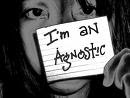
Agnosticism
Understanding others and advocating for the misunderstood
Empowering others
Compassion
Creativity
Resourcefulness
Humanism
Myth (properly understood in relation to and in contrast with historical fact)
Poetry
Music
The creative process
I remember going to a thrift store that sold used books with my mother when I was a teenager. Since both of us were creative people and avid readers always in search of inspirational material and useful guidance, our eyes were drawn to a $3.00 copy of author Julia Cameron’s self-help manual The Vein of Gold: A Journey to Your Creative Heart. The book was written as a follow-up piece to Cameron’s 1992 best-seller The Artist’s Way (which my mother had already read) and, to this day, it continues to influence my ever-developing views about personality and creative expression.
In The Vein of Gold, Cameron draws upon a variety of cultures and philosophies and offers a variety of exercises for readers to try in order to help them find their “vein of gold”- that underlying concern at the root of one’s interests and pursuits. I remember one exercise encouraged the reader to think of a list of their favorite movies and consider any common themes within the films on that list which might reveal something about one's personal interests.
It was a very revealing exercise for me and one that I continue to apply to my life. I came to believe along with Cameron that many of the subjects that interest us are in some way related to our sense of purpose and personal fulfillment. For example, could there be a deeper reason as to why I am drawn to films like The Village (2004), The Island (2005) and The Matrix (1999)? These films all serve as parables describing how individuals- discontent with the prevailing beliefs of their societies which are imposed by those in power to preserve a sense of order, control and stability- manage to find strange hints that suggest that "another world" exists beyond the physical and psychological boundaries of their familiar territory and struggle to fight their way out of those confines. What does it say about me since I am drawn to films such as these?
Today, I have decided to write new list of my personal interests. Although I don’t have a more formal name for this category, these are those people, topics, themes and subjects that give me a profound sense of fulfillment and exhilaration when I study or pursue them. My goal is to add more as they come to mind and attempt to decipher what meaning there is to be drawn from this growing list.
Some things that interest me:
Radical teaching
Critical thinking
Challenging assumptions
Liberating minds
Critiquing orthodoxies
Dismantling oppressive systems
Finding hints of “another world” that exists beyond the limited confines of familiar territory
Going beyond boundaries
Writing down my thoughts
Non-violent resistance
Mark Twain
Henry David Thoreau
Life-long learning
Human potential
Truth
Interviews
Q & A's
Questions
Interconnectedness
Placebos
Biblical criticism
Ethics
Stories that humanize human beings
Paulo Friere
Matthew Fox (the exiled priest)
Hearing from neglected, suppressed, exiled and over-looked perspectives
Providing opportunities for the silenced to share their voice
Spending time with my family
Meeting new people in authentic encounters (not merely “networking”)
Meeting people of different cultures
The Wire (TV series)
V for Vendetta (film)
The Matrix (film)
The Village (film)
The Island (film)
The Color Purple (book, play and film)
Anthropology
Psychology
Carl Sagan
Equality
Fairness
Hospitality
Parables
Comparative religions
Comparative mythology
Joseph Campbell
Gil Scott Heron
Performance poetry
Ethnic cuisine
Podcasts
Fictional stories that serve as prophetic critiques of society
Martin Luther King Jr.
Alice Walker
Bono
Ralph Nader
Psychology of religious belief and practice
The implications of modern scientific discoveries on human thought and behavior
The scientific method
Myth-busting
Historical Jesus research
Skepticism
Combating dehumanization in all of its forms, images and expressions
Political art
Voltaire
Anti-imperialism
Opinion columns
Movie previews
Photo essays
Agnosticism
Understanding others and advocating for the misunderstood
Empowering others
Compassion
Creativity
Resourcefulness
Humanism
Myth (properly understood in relation to and in contrast with historical fact)
Poetry
Music
The creative process
Thursday, May 8, 2008
Struggling with the assumptions of theology
I continue to struggle with 1) the whole idea that humans could possibly know the “mind”, “heart” or “will” of “God” and 2) that this supernatural “God” would intervene and reveal special messages to human beings (especially through one particular culture’s set of scriptures). As I understand it, most- if not all- forms of theology seem to be rooted in these two assumptions.
While I like the idea of using term “God” as being synonymous with “our ultimate concern” or symbolic of “that force within us that seeks truth or liberation,” my “red flags go up” when we start to personalize and give a human face to “God.”
As it relates to Liberation Theology, I’ve been wondering: Do we need a “God” to command us to treat others rightly? Has “God’s” name been utilized to invoke a compassion and justice based out of a fear of wrath or can we invoke compassion and justice through a reverence for our neighbor (which is enlightened by the scientific insight that we are all related in our biology and interconnected in this ecosystem called Earth)? Do we really need “God” to initiate responsive action toward the liberation of captives? Do we really need to be threatened by either earthly or eternal punishment or enticed with material or heavenly rewards in order to for us to be respectful, hospitable and humane towards others? I find it interesting that several other religious traditions manage to invoke compassion and make appeals for liberation without attributing it as being the willed command of a deity.
Instead of being “the revealed word of God,” could the Bible’s commands merely be those human ideas, tribal instincts and behavioral recommendations that gave Jewish and Christian cultures a sense of identity and stability in the midst of those surrounding cultures they considered “ungodly”? Here, I think of the Book of Leviticus and its repetitive commands to, “Be ye not like those people…be like this.” I also recall The Code of Hammurabi, how it was written centuries before the Hebrew Bible, how the Bible shares many of its laws, and how Hammurabi attributed the composition of his code to Marduk, the patron deity of Babylon. It’s enough to make me wonder: Is the Bible a collection of man-made commands that have been imposed by well-meaning people as being “God’s” will?
Maybe my “hermeneutics of suspicion” has been over-developed, but it seems presumptuous to suppose that the alleged creator of our expansive universe would be so wrapped up in earthly affairs that they would communicate their important and timeless message to all of humanity primarily and exclusively through the writings of a special group of Hebrew prophets and scribes who lived thousands of years ago. It’s hard for me to continue to believe that these special individuals were assigned to set forth “God’s” will in their time- for ALL time. As I’ve said before, I think the Bible is a collection of documents written for a variety of reasons by insightful, culture-bound Middle Eastern authors and that its interpretation is based on what some insightful humans throughout history have found in its pages to be meaningful, important and relevant for their own lives.
I’m willing to grant that there may be some transcendent, mystical dimension to life, but my doubts lead me to suspect that most- if not all- alleged mystical experiences could be accounted for with a naturalistic explanation of the brain’s neurobiological activities. While there “may” be some transcendent dimension, I doubt we human beings can be so secure in our certainty that such a dimension exists and that any of us can understand it.
It seems to me that “God” is a symbolic term that we humans often use to describe those aspects of reality which lay beyond our current understanding. If we don’t understand something, we often attribute it to “God.” How and why did I wake up this morning? I don’t know. It must be God. How was my daughter formed in the womb? I don’t know. It must be God. Why was I born into relative ease and privilege? I don’t know. Must be God. Why didn’t that tornado tear through my household as it did so many others? I don’t know. Again, it must be God.
For centuries, the natural sciences have been progressively chipping away at those things we formerly attributed to “God.” Astronomy, biology, physics, neurobiology and meteorology are just a few examples of fields that have made tremendous progress in explaining those things formerly beyond our capacity to comprehend. For thousands of years, cultures believed that “God” controlled the weather and that the weather was a reflection of either “God’s” favor or outrage. Now, I’d dare say, we know better.
At bottom- and at this point in my life- I think we attribute far too much of our perceived reality to the notion of “God.” I get suspicious of any and all who claim to know what this “God” wants- especially if it seems to mirror their own hopes, fears, desires and concerns.
While I like the idea of using term “God” as being synonymous with “our ultimate concern” or symbolic of “that force within us that seeks truth or liberation,” my “red flags go up” when we start to personalize and give a human face to “God.”
As it relates to Liberation Theology, I’ve been wondering: Do we need a “God” to command us to treat others rightly? Has “God’s” name been utilized to invoke a compassion and justice based out of a fear of wrath or can we invoke compassion and justice through a reverence for our neighbor (which is enlightened by the scientific insight that we are all related in our biology and interconnected in this ecosystem called Earth)? Do we really need “God” to initiate responsive action toward the liberation of captives? Do we really need to be threatened by either earthly or eternal punishment or enticed with material or heavenly rewards in order to for us to be respectful, hospitable and humane towards others? I find it interesting that several other religious traditions manage to invoke compassion and make appeals for liberation without attributing it as being the willed command of a deity.
Instead of being “the revealed word of God,” could the Bible’s commands merely be those human ideas, tribal instincts and behavioral recommendations that gave Jewish and Christian cultures a sense of identity and stability in the midst of those surrounding cultures they considered “ungodly”? Here, I think of the Book of Leviticus and its repetitive commands to, “Be ye not like those people…be like this.” I also recall The Code of Hammurabi, how it was written centuries before the Hebrew Bible, how the Bible shares many of its laws, and how Hammurabi attributed the composition of his code to Marduk, the patron deity of Babylon. It’s enough to make me wonder: Is the Bible a collection of man-made commands that have been imposed by well-meaning people as being “God’s” will?
Maybe my “hermeneutics of suspicion” has been over-developed, but it seems presumptuous to suppose that the alleged creator of our expansive universe would be so wrapped up in earthly affairs that they would communicate their important and timeless message to all of humanity primarily and exclusively through the writings of a special group of Hebrew prophets and scribes who lived thousands of years ago. It’s hard for me to continue to believe that these special individuals were assigned to set forth “God’s” will in their time- for ALL time. As I’ve said before, I think the Bible is a collection of documents written for a variety of reasons by insightful, culture-bound Middle Eastern authors and that its interpretation is based on what some insightful humans throughout history have found in its pages to be meaningful, important and relevant for their own lives.
I’m willing to grant that there may be some transcendent, mystical dimension to life, but my doubts lead me to suspect that most- if not all- alleged mystical experiences could be accounted for with a naturalistic explanation of the brain’s neurobiological activities. While there “may” be some transcendent dimension, I doubt we human beings can be so secure in our certainty that such a dimension exists and that any of us can understand it.
It seems to me that “God” is a symbolic term that we humans often use to describe those aspects of reality which lay beyond our current understanding. If we don’t understand something, we often attribute it to “God.” How and why did I wake up this morning? I don’t know. It must be God. How was my daughter formed in the womb? I don’t know. It must be God. Why was I born into relative ease and privilege? I don’t know. Must be God. Why didn’t that tornado tear through my household as it did so many others? I don’t know. Again, it must be God.
For centuries, the natural sciences have been progressively chipping away at those things we formerly attributed to “God.” Astronomy, biology, physics, neurobiology and meteorology are just a few examples of fields that have made tremendous progress in explaining those things formerly beyond our capacity to comprehend. For thousands of years, cultures believed that “God” controlled the weather and that the weather was a reflection of either “God’s” favor or outrage. Now, I’d dare say, we know better.
At bottom- and at this point in my life- I think we attribute far too much of our perceived reality to the notion of “God.” I get suspicious of any and all who claim to know what this “God” wants- especially if it seems to mirror their own hopes, fears, desires and concerns.
Subscribe to:
Posts (Atom)